
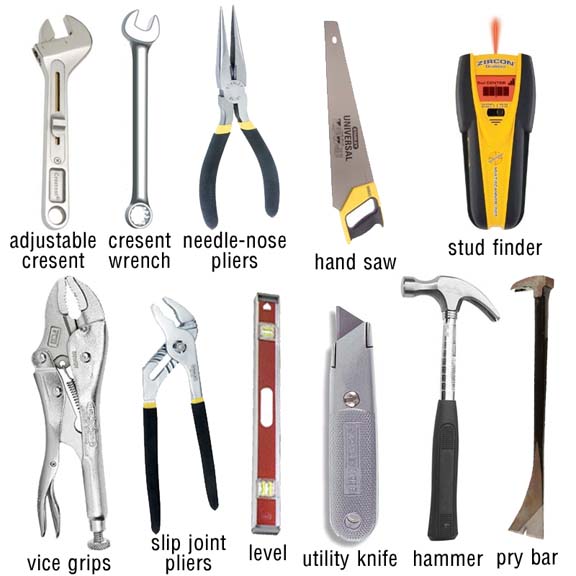
What’s In Your Toolbox? – What Every DIYer (or Homeowner) Should Own
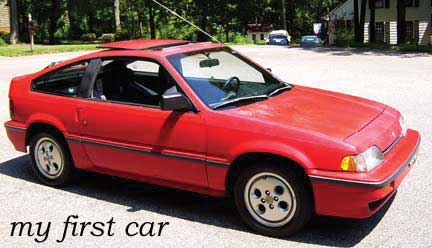
When I was 18, and bought my first car, and thought I was the coolest girl in town with a little zippy sportscar – sorry, just a little trip down memory lane. My parents gave me my first tool kit. That tool kit is still with me today and I do use it a lot. The set has a series of sockets, crescent wrenches, interchangeable screwdriver bits, allen (hex) wrenches, needle nose pliers, and locking pliers.
That set got me through several repairs (both auto and home). Now, as a homeowner, I have found that there are a few more tools to have on hand.
You will likely want to look for a multi-piece set like this one:
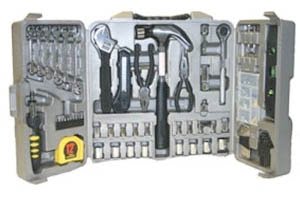
This will give you a wide variety of tools for a low cost. If you want a deal, try shopping for these sets around Father’s Day or Christmas. The set above was listed on Amazon.com for approximately $50 – $60.
Regardless if you are buying these items in a set or separate, these are the tools I recommend:
Homeowner essentials:
- Hammer
- Screwdrivers – Phillips head and a flat (straight or slotted) head. Try to buy a small and medium size of each.
- Allen (Hex) Wrenches in several sizes
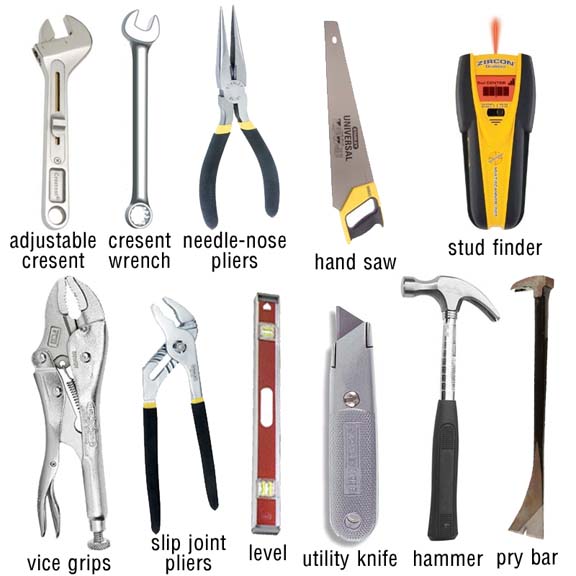
- Adjustable Crescent Wrenches – I suggest buying at least two. One 6″ and one 10″
- Slip Joint Pliers (handy for overall gripping)
- Needle-nosed pliers
- Vice grips (Locking pliers)
- Tape Measure
- Level – 24″ is preferrable
- Utility knife (mat knife)
- Safety glasses
- 12″ Handsaw
- Stud Finder
- Flashlight
- Pry bar (must have a flat sharp side and the other side a notch for pulling nails.)
- Tool box or case to keep all of the above in
- My favorite DIY guide to my home: Home Depot’s Home Improvement 1-2-3 – the best $15 I ever spent!
Screwdriver bits:

Last but not least, the most indispensable tool I’ve ever owned:
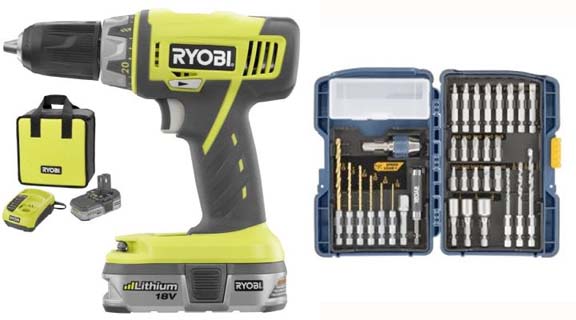
Cordless Drill with screwdriver bits and a small set of drill bits
For Electrical DIY:
- Wiring instruction book or guide
- Wire Cutters/Strippers
- Electrical Current tester
- You only need the simple tester with two probes and an indicator light to test if the power is on.

For the committed DIYer:
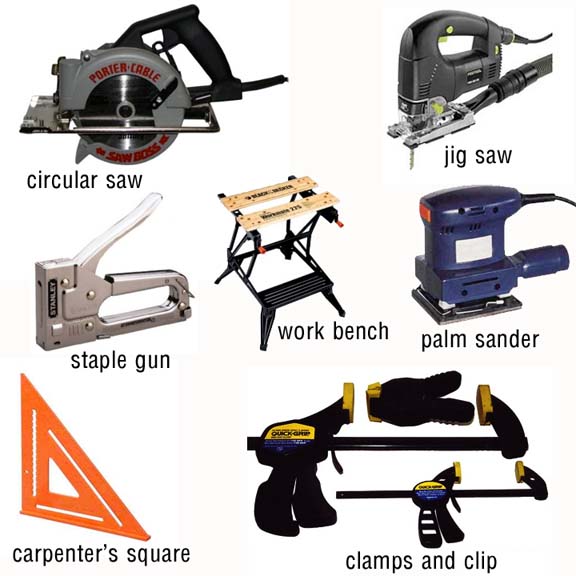
- Palm sander
- Carpenter’s square
- Staple gun
- Power Circular Saw
- Be sure to hold one in the store and feel how the grip feels in your hand. This is especially important as a woman with a smaller hand size. (more on power tool shopping in another blog post – coming soon!)
- Jig Saw
- Saw Horses or Folding Work Bench
- Clamps – A Variety of Adjustable Clamps and Clips
I hope this list gives you some good information so you won’t feel overwhelmed when buying tools. Definitely ask a sales person for help or opinions. Don’t tell them you are new at this. Ask them for the tool they would purchase if they were buying one for their shop. You should aim to buy a quality tool (especially power tools) that will last your lifetime. A cheap tool will either break or not have the power to do the job you need it to do. However, you don’t need to buy top of the line or break the bank to get a good tool.
Savings Tip: Many of the big box home improvement stores will usually price match tools that are priced cheaper at a competitor if it is the same make and model, plus take 10% off the price. Be sure to bring the ad with you or they will need to call or look up the price online.
Home Depots price guarantee:
NOBODY BEATS OUR PRICES
If any competitor tries, we’ll beat their price by 10%. Guaranteed.*
*If you find a current lower price on an identical, in-stock item from any retailer, we will match the price and beat it by 10%. Excludes special orders, bid pricing, volume discounts, open-box merchandise, labor and installation, sales tax, rebate and free offers, typographical errors and online purchases.
If any competitor tries, we’ll beat their price by 10%. Guaranteed.*
*If you find a current lower price on an identical, in-stock item from any retailer, we will match the price and beat it by 10%. Excludes special orders, bid pricing, volume discounts, open-box merchandise, labor and installation, sales tax, rebate and free offers, typographical errors and online purchases.
Lowe’s price guarantee:
We guarantee our everyday competitive prices. If you find a verifiable lower everyday or advertised price on an identical stock item at any local retail competitor that has the item in stock, we’ll beat their price by 10% when you buy from us. Just bring us the competitor’s current ad or we’ll call to verify the item’s price that you have found. Cash (charge card) and carry purchases only. Competitor’s closeout, special order, discontinued, clearance, liquidation and damaged items are excluded from this offer. On percent-off sales, Lowe’s will match the competitor’s percent-off offer. Limited to reasonable quantities for homeowner and one-house order quantities for cash and carry contractors. Current in-store price, if lower, overrides Lowe’s advertised price. Price guarantee honored at all Lowe’s retail locations. Labor charges for product installation are excluded from our price guarantee offer in our stores with an Installed Sales Program. Visit store for complete details.
Sear’s price guarantee:
If you find a lower price on an identical branded item with the same features (in Home Electronics identical brand and model number) currently available for sale at another local competitor retail store, Sears will match that price plus, give you 10% of the difference. Just bring in the original advertisement to a sales associate at the time of, or within 14 days after, your purchase. More fine print…
Happy Shopping!


The quick-grip clamps (the plastic ones pictured at the bottom of the article) are great for minor or quick fixes, but if you’re doing any sort of construction – even if it is just for a backyard shed or something – you’ll want metal C-clamps. They will always hold, they’re just a bit heavier and more cumbersome.
Other homeowner essentials: first aid kit 🙂
…more specifically some bandages for when I slam the hammer on my thumb ha!
Shhh.. but I confess I don’t own a hand saw. I do have a compound mitre saw, circular saw, hack saw, mitre saw, bow saw, coping saw, and jig saw but no hand saw. Maybe I should get one just so I can say I do. What exactly do you use a hand saw for?
And as for the “drill debate” I just got my first cordless drill (and driver) after going 10 years with a corded and I will NEVER go back. I just had to drill a hole to hang a light fixture in a 20 ft ceiling. To do that with a corded drill plu extension cord while hanging precariously off a ladder would have been a nightmare!
Kimbo,
The handsaw is good for making cross cuts on anything that you can’t (or don’t want to) pick up and bring over to the miter saw.
It is a good tool to have when you aren’t near a power source. And it will make you feel like a Pioneer Gal 😉
Wow! You really were listening and watching me when you were a little kid! I love this site and the exchange of ideas. There are three tips for using some of the tools: 1. If you can't reach a high spot when nailing, use the hammer to extend your one-handed reach by putting the nail in the claw with the point sticking out and the nail head against the hammer head. When you swing the hammer the nail will stick where it strikes. 2. If you're nailing into hard wood, such as oak, rub the nail through your hair to lubricate it for easier penetration. 3. Keep a pencil in your tool box and when marking a spot for cutting draw an arrowhead instead of the single line. A single line will usually be at an angle making it hard to see what spot on the line is your mark. Draw the first line of the arrowhead starting at the spot you want to mark. The next line starts at the same spot and forms the arrow head < . The point or the arrowhead marks your spot precisely.
Carrie, using a power drill takes some getting used to. Start slow and increase your speed once you feel more confident. Also, you don't need to push in too much. You should definitely try it again, don't let one time scare you away forever. I just read an article about using a power drill. I'll have to see if I can find it. I've been using them for years and I still learned something new.
Alana, thanks for the ideas. I do beg to differ with you about the drill. I kind of like the heft of a cordless, and I always have the second battery fully charged and ready. Good idea on the extension cord. I think I took it for granted that most homeowners would have one already.
I prefer a corded drill over cordless. It's lighter and better balanced, I don't have to worry about keeping the battery charged AND I don't have to worry about the battery no longer holding a charge. I also like to buy a kit of tips to go w/ my drill w/ both drill & screwdriver bits. If it comes w/ a punch and hole bits that's a plus! I lucked out a couple of years ago and DeWalt (MY FAVORITE!!!!) had a rebate for buy 1 get 1 free on a 32 bit set. Several manufacturers make various size kits though and most come with a carrying case. If you don't NEED all the excess bits, you may wish to consider a smaller kit which fits right inside your drill case.
Also, you may wish to add a heavy-duty extension cord to your list to ensure your power tools can reach wherever you are working on your project, i.e. sanding your back yard fence.
I guess I shouldn't admit that the first time I tried to use a power drill (loosening a wall outlet plate), it slipped and I almost put a hole in the drywall? I'm useless around power tools.